Medgar Evers' America
I love my country. I want to see it live. And I want to see it grow.

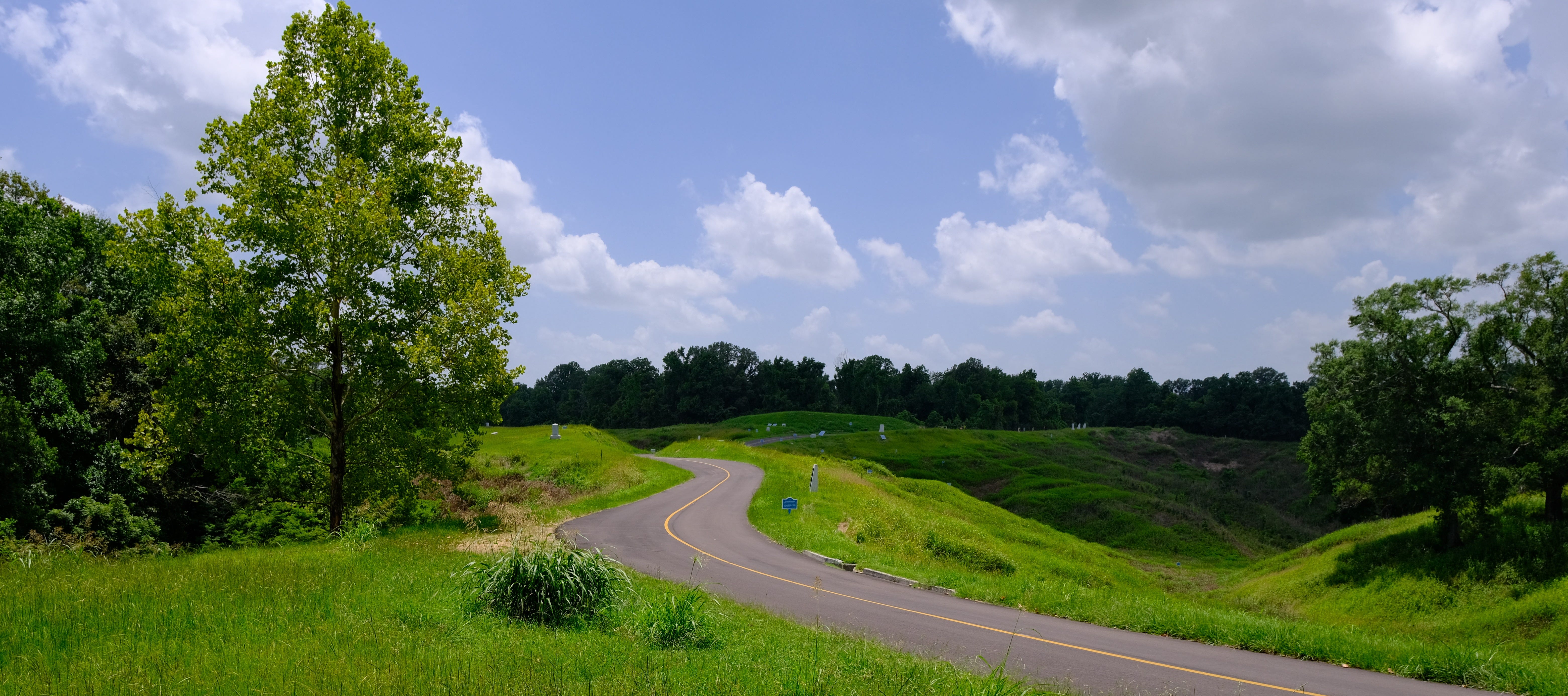
There is a universe where the wooded bluffs outside Vicksburg, Mississippi are one of America’s premiere national parks. In that universe, its dramatic ravines are hidden by hickory trees and holly, and reveal themselves to hikers along winding switchback walking trails.
In that alternate universe, one trail takes you to the highest point in the region, where you can peek out over the old course of the Mississippi River.
The land has not been scarred by war and death. Its hills are not pockmarked from mortars, shebangs, and TNT, and they are not shaved of trees so you can see what it looked like during the 1863 Siege of Vicksburg. In that alternate universe, signs educate visitors about the life all around them, instead of where regiments fought and died. Blue signs for Union actions, red signs for Confederate ones. At that one highest point, your view of the landscape is not broken up by thousands of little white tombstones.
But this is the universe we have. Luckily, the land at Vicksburg National Battlefield Monument is still incredibly beautiful, there’s just more to its story.
The very setting that gives Vicksburg its unique natural beauty made the city an economic powerhouse (the Mississippi River), and gave it a nearly impregnable defensive position (its bluffs). Vicksburg was a key trading hub along the river and a top military target. Abraham Lincoln said, “Vicksburg is the key! The war can never be brought to a close until that key is in our pocket.” Jefferson Davis agreed that Vicksburg was the “nailhead that holds the South's two halves together.”
If Vicksburg fell, the rest of the South could fall too.
I can tell you what it’s like to stand at the Union lines and look up to the hills they somehow scaled, but I cannot tell you how Union soldiers doing the same in 1863 could find their legs beneath then when the call to charge into certain death was made. But to win the war, Vicksburg had to be won. And it was.
The Siege of Vicksburg ended officially on July 4, 1863. Vicksburg did not celebrate Independence Day again until 1945. That year, and for some years onward, they celebrated July 4th with a “Carnival of the Confederacy”. From 1863 to 1944, there were 14 recorded lynchings in Warren County, where Mississippi sits. In 1873, just before the end of Reconstruction, Peter Crosby, a black man elected sheriff of the county, was forcibly removed from office and killed, along with over 100 other Black people. “Independence Day” was not officially celebrated again in Vicksburg until 1976. Vicksburg had originally voted to remain in the Union, but was overruled by most of the rest of Mississippi.
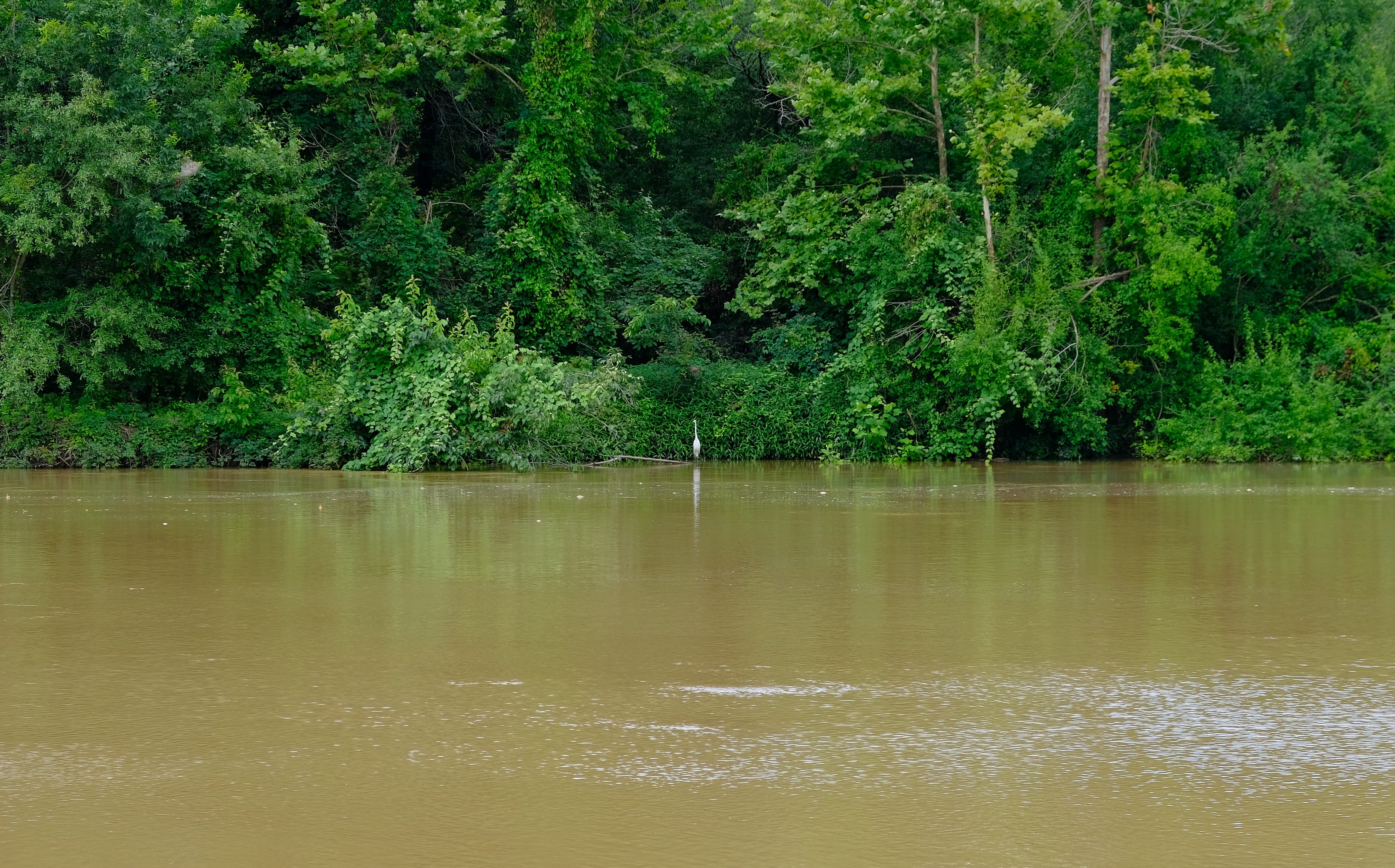
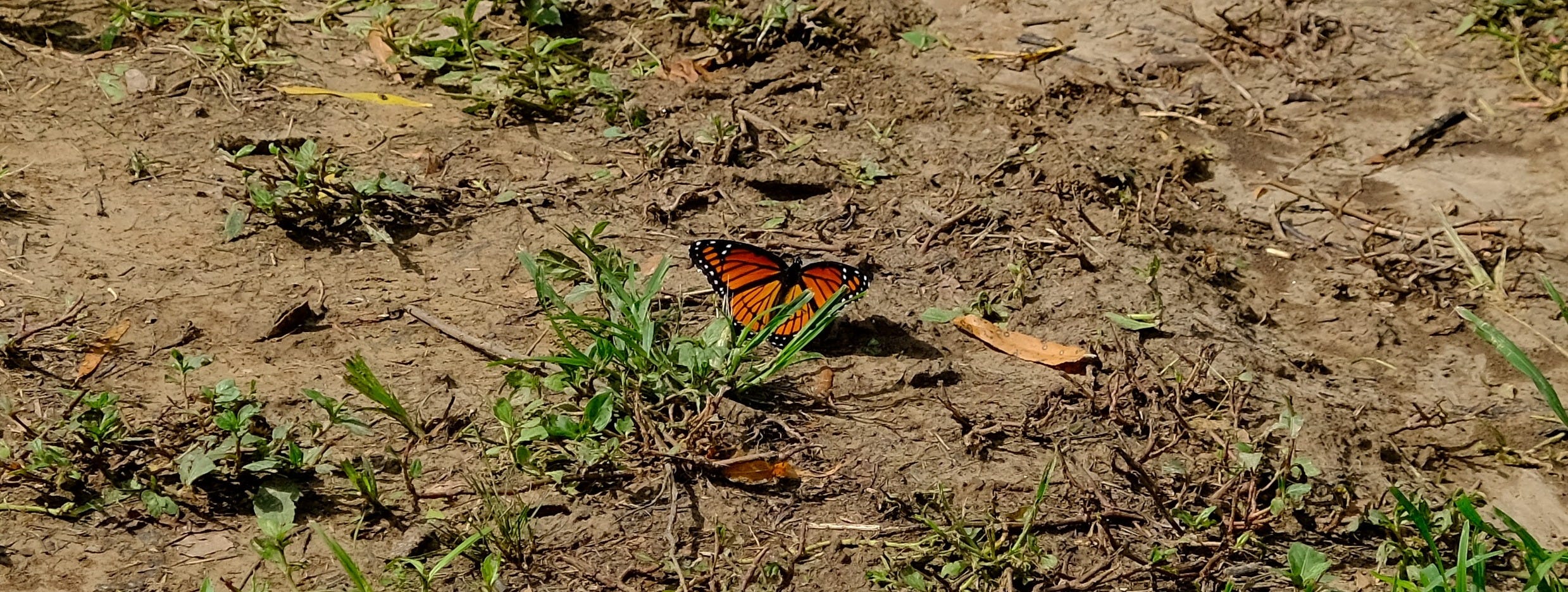
There is a universe where the Little Tallahatchie River is just a beautiful river. In that universe, I am just standing on its banks at Graball Landing, one hundred and some miles from Vicksburg, my shoes caked with crimson clay, scanning the powerful and shockingly quick flow of this river. I am wondering how the tiny little legs of the great white egret, who is knee-deep off the opposite bank, are not getting swept away. A monumental ash tree filters the hot Mississippi sun for me and the monarch butterfly that’s checking us out.
In that alternate universe, this is not the alleged site where two people fishing found the body of Emmett Till in late August, 1955.
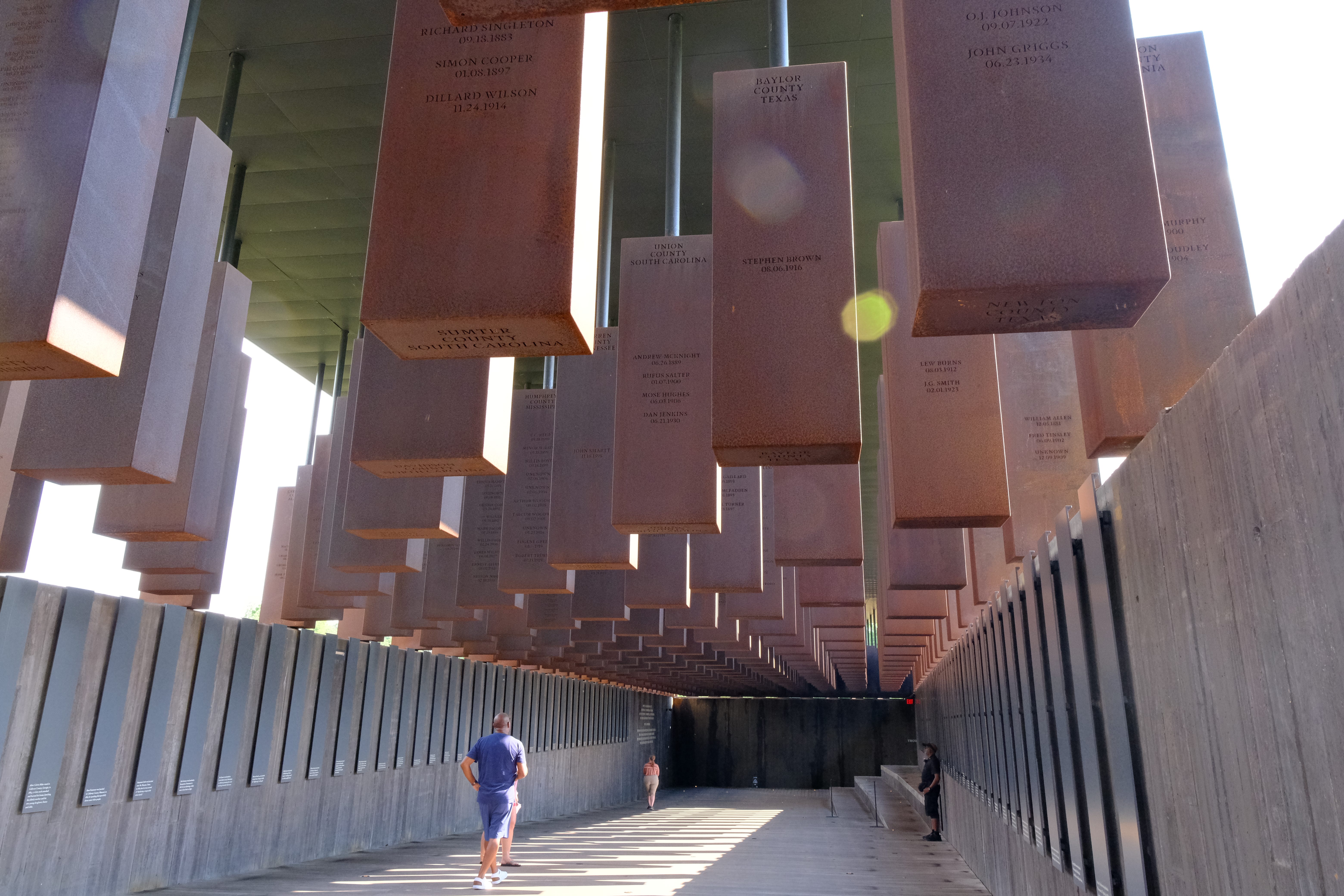
Graball Landing can show me where a lynching ended. I really began to touch the surface to the indescribably suffocating terror of lynching by seeing written first-hand accounts of the lynchings of Black people in America, at the National Memorial for Peace and Justice and the Legacy Museum in Montgomery, Alabama.
These places helped me better appreciate the full scale of lynching as decades of daily terrorism on Black America. Black people were lynched for talking too much, and for not saying the right word at the right time; for talking to white people, for writing to them, and for accidentally knocking on a white person’s door; for walking by a white woman’s window, and for walking behind a white woman. Black people were lynched when their businesses got too successful, and when their land suddenly became valuable. Black people were lynched when another “wanted” Black person could not be found. Black people were lynched for voting, for trying to get other people to vote, and for when a family member of theirs voted. A young black man, John Taylor, was even lynched in Ingham County, Michigan, in 1866, and he was not the only person lynched in Michigan.
When Emmett Till’s story reached Medgar Evers, a World War II veteran and the relatively new Mississippi field secretary for the NAACP (their first ever in the state), he is said to have cried out.
Evers was no stranger to the terror of the South. His grandfather’s land had been stolen by white people through dubious legal maneuvers. As a child, he knew people who had been lynched. From Vicksburg to Graball Landing, Mississippi was Medgar Evers’ America. This was the state that made him. And with the highest lynchings per capita, and next to no Black voter registrations, it was arguably the rotten heart of the Jim Crow South.
But despite that, he was a biblically bold advocate for Civil Rights. Evers decided that Emmett Till’s story had to be shown to the world. He went out and found witnesses, coordinated the testimony of the trial, and convinced Mamie Till, Emmett’s mother, to hold an open-casket funeral.
For these and many other organizing strategies, Evers lived with the constant specter of his own death. Evers had survived multiple assassination attempts. But he was driven by an incredibly fierce conviction that he had to work in Mississippi. He knew that if Mississippi fell, the rest of the South could fall too.
Medgar Evers unfortunately fell before Jim Crow did, shot outside his home.
His work is likely not yet finished. Medgar Evers’ America is not quite fully in the past. Since 2000, there have been at least 8 cases of Black men found hanging from trees in Mississippi, all ruled suicides with little to no investigation. Today, trans people and immigrants and others are also the subject of down-home terror. But groups like the Equal Justice Initiative, who run the Legacy Museum and the National Memorial for Peace and Justice, along with many, many others, have picked up his torch.
During the time when Vicksburg did not celebrate Independence Day at all, from 1863 until 1944, Black people were lynched at least 3,424 recorded times.
After Vicksburg finally decided to do *something* on July 4, America recorded another 21 lynchings of Black Americans. The last confirmed lynching in Mississippi took place in 1981, six years after Vicksburg officially celebrated Independence Day for the first time in the 20th Century.
Medgar Evers never once called for the boycotting of Independence Day. Shortly before his death, he said, “I love my children and I love my wife, and I love my people. I love my country, and I want to see it live.”
I love my country, and I want to see it live. I also want to see it grow.
Medgar Evers knew that America is what we make it to be. We can make it a place where all people can live free from terror. We will do this. We just have work to do.